By Youths
By Youths
Finding Light: My Path from Darkness to Advocacy
Finding Light: My Path from Darkness to Advocacy
Sometimes seeking help isn’t as straightforward as we may think. In Gina’s story, she shares the importance of being heard, being able to trust, and how it all contributed to her journey of recovery.
Sometimes seeking help isn’t as straightforward as we may think. In Gina’s story, she shares the importance of being heard, being able to trust, and how it all contributed to her journey of recovery.
Gina
Gina
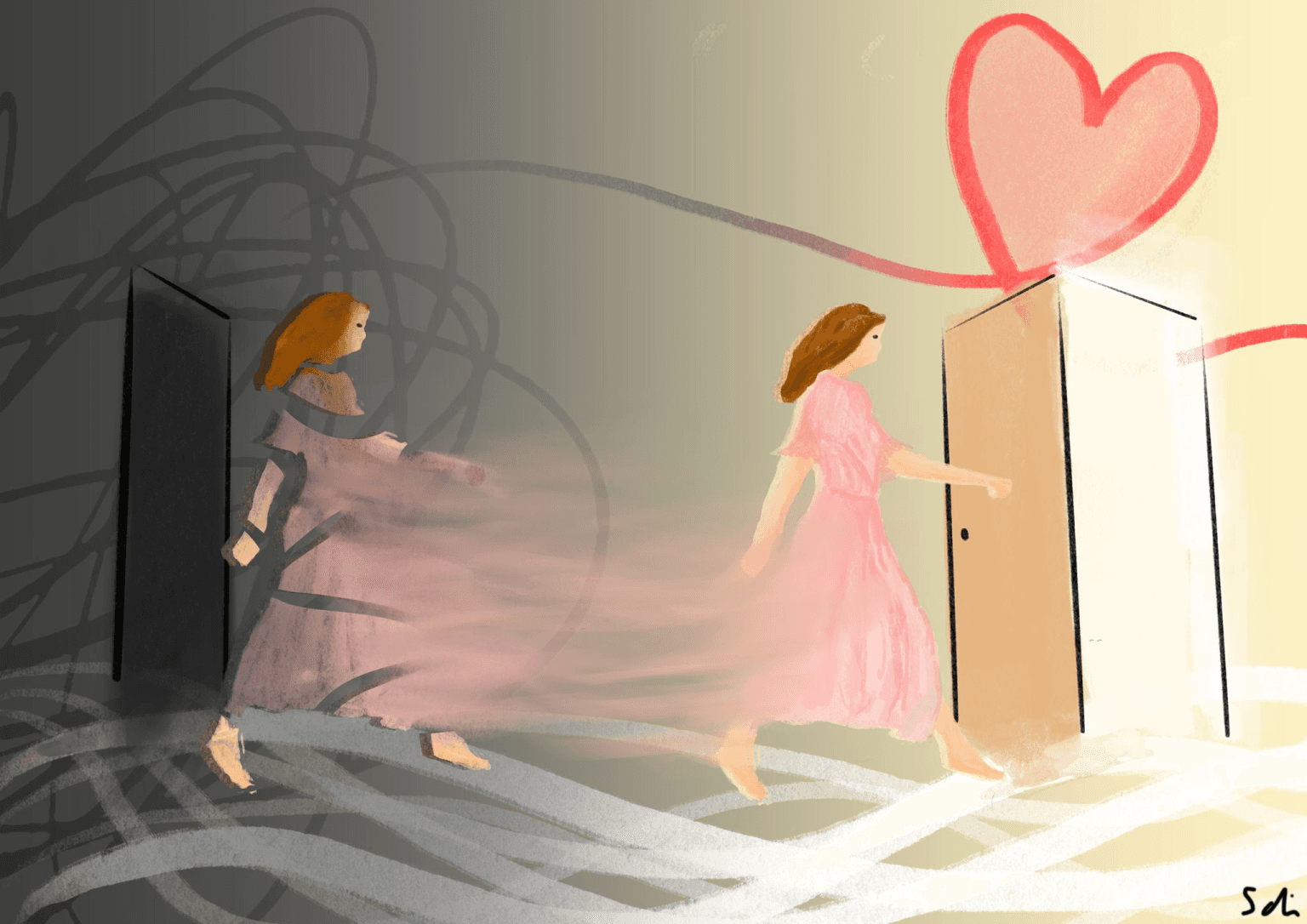
When you hear the words “mental health” or “mental illness,” what comes to mind? Many people immediately think of words like “crazy” or “mad,” reflecting common misconceptions. But what about “seeking help”? How does that make you feel? Imagine being diagnosed with a mental illness—would you feel embarrassed, scared, or sad? Perhaps you might worry about what others might think or struggle to find someone you can truly trust to talk to, fearing that they might share your innermost thoughts with others.
We all have unconscious prejudices–formed by society, media, and past experiences–that shape how we view mental health, often without us even realising it.
At the age of 11, I was diagnosed with Attention-Deficit Hyperactivity Disorder (ADHD) & Conduct Disorder. Growing up in a children’s home, I was raised by strangers. As a loud, energetic child, I often faced bullying—being called names, and beaten whenever I tried to defend myself. This bullying continued in school to a point where I found it unbearable to continue living. Although the people around me had managed to prevent me from ending my life, the trauma of those experiences still stay with me until this day.
Seeking professional help wasn’t a straightforward journey.
In 2013, I was brought to IMH after the staff at the children’s home I lived in saw me acting out in anger and frustration. After seeing the psychiatrist and psychologist for two years, I decided to stop seeing them altogether because of my bad experiences with them.
I had trouble accepting the diagnoses I was given—ADHD and Conduct Disorder—and felt that these diagnoses were made mostly based on what the staff shared with the doctor, not what I had personally said or felt. Throughout our interactions, I felt unheard and misunderstood, which made it hard for me to trust the process.
Over the years, though, as I grew older, I noticed signs of ADHD in myself that began to make more sense, and I started to slowly accept that part of the diagnosis. But even then, it didn’t feel like the full picture. I wasn’t simply just ‘acting out’; I was a kid stuck in survival mode because of the bullying I was going through. I think that’s why I questioned the diagnosis—it didn’t take into account my environment or trauma.
There was so much that had happened to me in the past few years—some of it deeply traumatizing; I’m not ready to talk about those just yet. But I do want to share part of my story now to help others understand the complexity of recovery.
This motivated me to begin opening up to my friends about seeking help and finding the right organisation. Many of them encouraged me to be brave and seek help, even if it felt hard or uncomfortable. They reminded me that things could get worse if I didn’t take that step.
Professional mental health support, however, can be expensive. In Singapore, it costs about $150-$800 to see private healthcare providers, and about $30-150 for public healthcare institutions like the polyclinics and restructured hospitals.
I knew I didn’t want to go back to IMH because of the past experiences I had where the staff were not hearing me, and it was impossible for me to seek private care. So I began searching for alternatives.
That’s when I discovered that some non-profit organizations offer fully subsidized counselling sessions. And from there, I began my journey toward finding light again—out of the dark valley I’d been stuck in for so long.
At the time, I was doing a school internship and felt scared of being identified, so I opted for Zoom sessions instead of face-to-face meetings. It was nerve-wracking. When I finally met my counsellor via Zoom, I remember asking myself if I’d be able to trust her enough to open up about my life fully to her, or if she would judge me like how others did previously. After that first Zoom session, I could sense that she was kind and caring, but due to my past, it took me about a year of sessions to fully trust and open up to her.
As with life events, during the journey of my recovery, I started experiencing difficulty sleeping and felt extremely depressed. After a series of traumatic events, I decided to attempt suicide once again. At the time, I believed this would make the pain and suffering stop—it didn’t and landed me back in IMH.
I texted my counsellor and told her about my attempt, and she responded with concern and kindness. She said things like “Hey you, sounds like it’s been pretty tough for you, I’m so glad to hear that you’re alive”, and reminded me, “It’s okay, we all trip and fall sometimes – Important thing is to get back up again”. Her words helped me feel loved, safe, understood and not judged. She even offered to call even though she had a pretty packed schedule.
Despite her care, I felt I was still stuck on a never-ending carousel—I kept going in circles, unable to figure out what exactly was wrong with me. Then, in March 2024, just before my counsellor went on a sabbatical, I met one of her colleagues who would be taking over my sessions for the next few weeks. I assumed she was just another counsellor, but to my surprise, she was actually the new in-house psychologist.
Over the course of several weeks, we went through assessments and got to know each other. Eventually, she diagnosed me with Complex Post-Traumatic Stress Disorder (CPTSD). For the first time, everything started to make sense—why I never felt “normal”; why I constantly felt like something was off. That diagnosis was a turning point.
After that, my psychiatrist from IMH had a Zoom session with both my counsellor and psychologist to discuss the findings and plan for my treatment. My doctor intended to start me on new medication at my next appointment, but that didn’t happen as planned—I was admitted in September 2024 (a story I’ll share another time).
Meanwhile, I began Cognitive Processing Therapy (CPT). What was meant to be a 12-week program extended to 20 weeks because of my admission in September. It was one of the toughest journeys I’ve ever been on. The therapy involved a lot of homework that was deeply triggering—looking back at painful memories I tried hard to bury. There were times I skipped the assignments because they felt too emotionally draining. But I got through it. I pulled through. And I was only able to do that because I had the most incredible support system.
My psychologist and counsellor believed in me, even when I didn’t believe in myself. They constantly reminded me, “You can do hard things because you have so much resilience in you.” They saw the fight in me long before I did. They reminded me of my strengths, how far I’ve come, and to keep going—that there is light at the end of the tunnel. That there’s hope. That things can get better. But for that to happen, I had to keep fighting. I couldn’t—and shouldn’t—give up.
Looking back, it’s been incredibly hard going through all of this alone, especially at such a young age. I’ve often wondered: Am I loved? Am I wanted? Where was my family during those dark times? Is my life even worth living? But through it all, the people around me—friends, counsellors, the team at the non-profit—reminded me of my worth, even when I couldn’t see it for myself.
Since seeking help from IMH and the non-profit organization, I’ve found a new purpose: I want to help other youths who are suffering in silence. I want to connect them to the same kind of support and resources that helped me find my way.
I’m deeply grateful to my counsellor and psychologist for standing by me through my darkest days. The team at this non-profit has shown me nothing but kindness, compassion, and guidance. They’ve created a safe space for me to heal, and for that, I’ll always be thankful.
By sharing my personal mental health journey alongside these resources, I hope to encourage more people to seek help and spread awareness about the importance of mental health. My goal is to make it easier for others to find the support they need — especially those who may be suffering in silence. I was once in that position myself. I didn’t know who to turn to, how much help would cost, or how people would judge me after I got support. The fear of being seen differently kept me quiet for a long time.
I hope that by sharing my story, it helps young people of all ages know that there’s someone silently cheering them on — even if they don’t know who we are. Sometimes, just knowing you’re not alone is enough to keep going.
I don’t want others to suffer the way I did. That’s why I’ve been gathering mental health resources and making them easier to access — so more of us, especially youths, can seek help and feel less afraid to do so. But I believe even small steps can create big ripples for someone who’s struggling.
Gina is a 22-year-old youth advocate who is currently pursuing early childhood education. She loves working with children and believes that everyone’s mental health starts from a young age. By sharing her story, she hopes to inspire others on their mental health journeys. Gina has also created a free resource directory to help young children (7-12) & youths (13-25) easily access mental health support, which can be found here: (https://linktr.ee/ginaaax.hb). She also really likes bubble tea and baking.
Image Credit: Sofia
When you hear the words “mental health” or “mental illness,” what comes to mind? Many people immediately think of words like “crazy” or “mad,” reflecting common misconceptions. But what about “seeking help”? How does that make you feel? Imagine being diagnosed with a mental illness—would you feel embarrassed, scared, or sad? Perhaps you might worry about what others might think or struggle to find someone you can truly trust to talk to, fearing that they might share your innermost thoughts with others.
We all have unconscious prejudices–formed by society, media, and past experiences–that shape how we view mental health, often without us even realising it.
At the age of 11, I was diagnosed with Attention-Deficit Hyperactivity Disorder (ADHD) & Conduct Disorder. Growing up in a children’s home, I was raised by strangers. As a loud, energetic child, I often faced bullying—being called names, and beaten whenever I tried to defend myself. This bullying continued in school to a point where I found it unbearable to continue living. Although the people around me had managed to prevent me from ending my life, the trauma of those experiences still stay with me until this day.
Seeking professional help wasn’t a straightforward journey.
In 2013, I was brought to IMH after the staff at the children’s home I lived in saw me acting out in anger and frustration. After seeing the psychiatrist and psychologist for two years, I decided to stop seeing them altogether because of my bad experiences with them.
I had trouble accepting the diagnoses I was given—ADHD and Conduct Disorder—and felt that these diagnoses were made mostly based on what the staff shared with the doctor, not what I had personally said or felt. Throughout our interactions, I felt unheard and misunderstood, which made it hard for me to trust the process.
Over the years, though, as I grew older, I noticed signs of ADHD in myself that began to make more sense, and I started to slowly accept that part of the diagnosis. But even then, it didn’t feel like the full picture. I wasn’t simply just ‘acting out’; I was a kid stuck in survival mode because of the bullying I was going through. I think that’s why I questioned the diagnosis—it didn’t take into account my environment or trauma.
There was so much that had happened to me in the past few years—some of it deeply traumatizing; I’m not ready to talk about those just yet. But I do want to share part of my story now to help others understand the complexity of recovery.
This motivated me to begin opening up to my friends about seeking help and finding the right organisation. Many of them encouraged me to be brave and seek help, even if it felt hard or uncomfortable. They reminded me that things could get worse if I didn’t take that step.
Professional mental health support, however, can be expensive. In Singapore, it costs about $150-$800 to see private healthcare providers, and about $30-150 for public healthcare institutions like the polyclinics and restructured hospitals.
I knew I didn’t want to go back to IMH because of the past experiences I had where the staff were not hearing me, and it was impossible for me to seek private care. So I began searching for alternatives.
That’s when I discovered that some non-profit organizations offer fully subsidized counselling sessions. And from there, I began my journey toward finding light again—out of the dark valley I’d been stuck in for so long.
At the time, I was doing a school internship and felt scared of being identified, so I opted for Zoom sessions instead of face-to-face meetings. It was nerve-wracking. When I finally met my counsellor via Zoom, I remember asking myself if I’d be able to trust her enough to open up about my life fully to her, or if she would judge me like how others did previously. After that first Zoom session, I could sense that she was kind and caring, but due to my past, it took me about a year of sessions to fully trust and open up to her.
As with life events, during the journey of my recovery, I started experiencing difficulty sleeping and felt extremely depressed. After a series of traumatic events, I decided to attempt suicide once again. At the time, I believed this would make the pain and suffering stop—it didn’t and landed me back in IMH.
I texted my counsellor and told her about my attempt, and she responded with concern and kindness. She said things like “Hey you, sounds like it’s been pretty tough for you, I’m so glad to hear that you’re alive”, and reminded me, “It’s okay, we all trip and fall sometimes – Important thing is to get back up again”. Her words helped me feel loved, safe, understood and not judged. She even offered to call even though she had a pretty packed schedule.
Despite her care, I felt I was still stuck on a never-ending carousel—I kept going in circles, unable to figure out what exactly was wrong with me. Then, in March 2024, just before my counsellor went on a sabbatical, I met one of her colleagues who would be taking over my sessions for the next few weeks. I assumed she was just another counsellor, but to my surprise, she was actually the new in-house psychologist.
Over the course of several weeks, we went through assessments and got to know each other. Eventually, she diagnosed me with Complex Post-Traumatic Stress Disorder (CPTSD). For the first time, everything started to make sense—why I never felt “normal”; why I constantly felt like something was off. That diagnosis was a turning point.
After that, my psychiatrist from IMH had a Zoom session with both my counsellor and psychologist to discuss the findings and plan for my treatment. My doctor intended to start me on new medication at my next appointment, but that didn’t happen as planned—I was admitted in September 2024 (a story I’ll share another time).
Meanwhile, I began Cognitive Processing Therapy (CPT). What was meant to be a 12-week program extended to 20 weeks because of my admission in September. It was one of the toughest journeys I’ve ever been on. The therapy involved a lot of homework that was deeply triggering—looking back at painful memories I tried hard to bury. There were times I skipped the assignments because they felt too emotionally draining. But I got through it. I pulled through. And I was only able to do that because I had the most incredible support system.
My psychologist and counsellor believed in me, even when I didn’t believe in myself. They constantly reminded me, “You can do hard things because you have so much resilience in you.” They saw the fight in me long before I did. They reminded me of my strengths, how far I’ve come, and to keep going—that there is light at the end of the tunnel. That there’s hope. That things can get better. But for that to happen, I had to keep fighting. I couldn’t—and shouldn’t—give up.
Looking back, it’s been incredibly hard going through all of this alone, especially at such a young age. I’ve often wondered: Am I loved? Am I wanted? Where was my family during those dark times? Is my life even worth living? But through it all, the people around me—friends, counsellors, the team at the non-profit—reminded me of my worth, even when I couldn’t see it for myself.
Since seeking help from IMH and the non-profit organization, I’ve found a new purpose: I want to help other youths who are suffering in silence. I want to connect them to the same kind of support and resources that helped me find my way.
I’m deeply grateful to my counsellor and psychologist for standing by me through my darkest days. The team at this non-profit has shown me nothing but kindness, compassion, and guidance. They’ve created a safe space for me to heal, and for that, I’ll always be thankful.
By sharing my personal mental health journey alongside these resources, I hope to encourage more people to seek help and spread awareness about the importance of mental health. My goal is to make it easier for others to find the support they need — especially those who may be suffering in silence. I was once in that position myself. I didn’t know who to turn to, how much help would cost, or how people would judge me after I got support. The fear of being seen differently kept me quiet for a long time.
I hope that by sharing my story, it helps young people of all ages know that there’s someone silently cheering them on — even if they don’t know who we are. Sometimes, just knowing you’re not alone is enough to keep going.
I don’t want others to suffer the way I did. That’s why I’ve been gathering mental health resources and making them easier to access — so more of us, especially youths, can seek help and feel less afraid to do so. But I believe even small steps can create big ripples for someone who’s struggling.
Gina is a 22-year-old youth advocate who is currently pursuing early childhood education. She loves working with children and believes that everyone’s mental health starts from a young age. By sharing her story, she hopes to inspire others on their mental health journeys. Gina has also created a free resource directory to help young children (7-12) & youths (13-25) easily access mental health support, which can be found here: (https://linktr.ee/ginaaax.hb). She also really likes bubble tea and baking.
Image Credit: Sofia


hello@thetapestryproject.sg
The Foundry, 11 Prinsep Link, Singapore 187949
hello@thetapestryproject.sg
The Foundry, 11 Prinsep Link, Singapore 187949
hello@thetapestryproject.sg
The Foundry, 11 Prinsep Link, Singapore 187949
hello@thetapestryproject.sg
The Foundry, 11 Prinsep Link, Singapore 187949