By Youth
By Youth
My Anchor, My Mirror: My Counsellor’s Response to My Cancer Diagnosis
My Anchor, My Mirror: My Counsellor’s Response to My Cancer Diagnosis
Gina writes of the anguish caused by a cancer diagnosis when still facing mental health challenges, and of the help her counsellor gave her by allowing her to recognise her own resilience
Gina writes of the anguish caused by a cancer diagnosis when still facing mental health challenges, and of the help her counsellor gave her by allowing her to recognise her own resilience
Gina
Gina
How do you say a word that feels bigger than your entire life?
I didn’t want to tell anyone about my diagnosis. It all started with a lump under my arm, something I thought was minor. When it was removed and sent for a biopsy, I tried not to think too much about it. A few weeks later, I sat in the doctor’s office, hoping—praying—for good news. My heart was pounding, my hands were shaking, and I kept telling myself it would be okay, but it wasn’t.
My doctor looked at me, took my hands in hers, and said, “I’m so sorry. It’s lymphoma. Stage 2.” The words hit me like a wave I couldn’t catch. She explained I would need to be referred to the National Cancer Centre Singapore, and soon after I was transferred to NUH Cancer Centre.
I was frozen. My mind screamed in disbelief. I kept hoping I was dreaming, that I would wake up and none of this would be real. But every pang in my chest, every ache in my body, reminded me that it wasn’t a nightmare I could wake from. It was real. In a moment, my world changed forever. And because I already live with Complex PTSD, Mixed Anxiety-Depressive Disorder (MADD), and Psychogenic Nonepileptic Seizures (PNES), the shock did not land gently. My nervous system does not know how to receive danger calmly. It goes straight to alarm, and I felt this immediately — hypervigilance, racing thoughts, and the sense that I was no longer safe in my own body.
I was afraid of the cancer, but I was also afraid of myself. A cancer diagnosis, when you already live with trauma, feels like being asked to take on something new while still carrying all the old burdens. Would the nightmares return? Would hospital corridors trigger flashbacks? Would the stress cause my PNES episodes to flare again? Or would the depression that once nearly consumed me come back stronger?
Cancer is a big and scary word. It sits in your throat like something sharp. It echoes in hospital corridors, and it changes the way people look at you. When I first heard it, I felt as if the universe hated me and everything I had already survived was not enough. The storms in my life seemed to have grown into a hurricane. Because of this, I carried the word quietly at first. I didn’t want it to become part of my story, but there was one person I knew I had to tell.
She has been my counsellor since 2021. She has seen the broken pieces of me, the anger, the trauma, and the nights I didn’t want to live. This was not news she would ever expect from me, and I didn’t even know how to form the words to tell her. I remember staring at my phone, revising what I would say in my head. There was no gentle way to tell her, “I have Stage 2 Hodgkin’s lymphoma.”
Yet when I finally told her, the silence that followed wasn’t cold. It was a heavy silence, and then she cried alongside me. What I didn’t understand then was that she wasn’t just sharing my grief. She was also quietly helping me see my own resilience. Every time I said, “I can’t do this,” she didn’t argue. She didn’t rescue. She asked questions that brought me back to something steadier:
You are here.
You are thinking this through.
You are still choosing.
I thought strength meant not breaking, but she showed me that strength can look like breaking at first and yet in fact be resilience. My strength came from sitting in chemo while afraid, and from admitting I was angry. I found more strength in continuing therapy when depression pressed heavy on my chest, and in allowing myself to say, “This is unfair,” without shame.
I had survived trauma before. I had learned grounding skills. I had endured PNES episodes and fought for stability. The diagnosis threatened to unravel all of this, and some days it did. And yet I did not disappear. Cancer did not erase the woman who had already rebuilt herself once. If anything, it revealed more of her. Stage 2 Hodgkin’s lymphoma meant chemotherapy. Four cycles, I was told. I tried to be brave. But chemotherapy isn’t just a regular IV drip. It stings and burns, leaving your body aching in ways you didn’t know were possible. It drains you both physically and mentally.
I was already fighting other illnesses. There were days I didn’t want to continue, when I thought, “Haven’t I done enough? Haven’t I survived enough?”
Then, just when I was mentally prepared to finish four cycles, the doctor added a fifth, and a stem cell transplant.
I remember looking at my counsellor during our next session, telling her that I didn’t want chemo, and asking her to decide for me, to tell me which path would hurt less. Instead of choosing for me, she helped me find my own strength. She reminded me again that fear does not mean weakness. That not wanting chemo did not mean I was ungrateful for treatment. She sat with my anger, bargaining and exhaustion, helping me see my strengths.
I had thought I needed someone to decide for me, someone who was stronger than I was. She reflected back a different truth at me, one I initially had difficulty believing: that I was already surviving. I wasn’t yet surviving with grace, or without fear. My strength was not loud, and on the surface, it didn’t look like optimism. Yet it was based on honesty. I could allow myself to say, “I don’t want this,” instead of pretending I was brave, and I showed up for chemotherapy even while terrified. I continued therapy even when depression whispered that nothing mattered. Instead of isolating myself, I asked for help, and I stayed even when every part of me wanted to run.
Slowly, I realised that I’d survived trauma, learned grounding techniques, fought CPTSD flare-ups and kept going through PNES episodes through the resilience that cancer was showing me again.
My counsellor didn’t give me strength, but instead acted as a mirror to me. In that mirror, I began to see that fear and courage could coexist. Exhaustion, I learned, does not cancel out resilience; continuing, even if broken, is still continuing. My strength came not from a lack of fear, but from my choice to live.
My counsellor encouraged me through every cycle, checking in with me after infusions. She helped me untangle the hopeless thoughts that chemotherapy magnified. When I felt as if my body was betraying me, she reminded me that my body was also fighting for me.
I have finished all four cycles now. I have one more to go, and then the stem cell transplant. I never imagined I would be battling cancer at 22. I turn 23 in June 2026, and instead of thinking about birthdays or milestones, I am thinking about blood counts and hospital rooms.
But I am not alone. I am so grateful to have my counsellor beside me in this chapter of my life. I’m also grateful to the people who hold my hands, send messages, pray for me, or sit with me in silence. Cancer is a long, painful, and mentally draining battle that cannot simply be treated with a pill.
To those struggling with cancer, I’d say this: I feel you, your pain, your cries and your anger. I see these things in my own mirror too. We are not facing an easy fight. But I’ve learned that even when the word feels too big, and the universe unfair, having someone stand beside you can make the unbearable slightly more bearable.
Sometimes, that is enough to keep going.
Gina is a 22-year-old youth advocate who is currently pursuing early childhood education. She loves working with children and believes that everyone’s mental health starts from a young age. By sharing her story, she hopes to inspire others on their mental health journeys. Gina has also created a free resource directory to help young children (7-12) & youths (13-25) easily access mental health support, which can be found here: (https://linktr.ee/ginaaax.hb). She also really likes bubble tea and baking.
Read more of our Tapestry Stories here
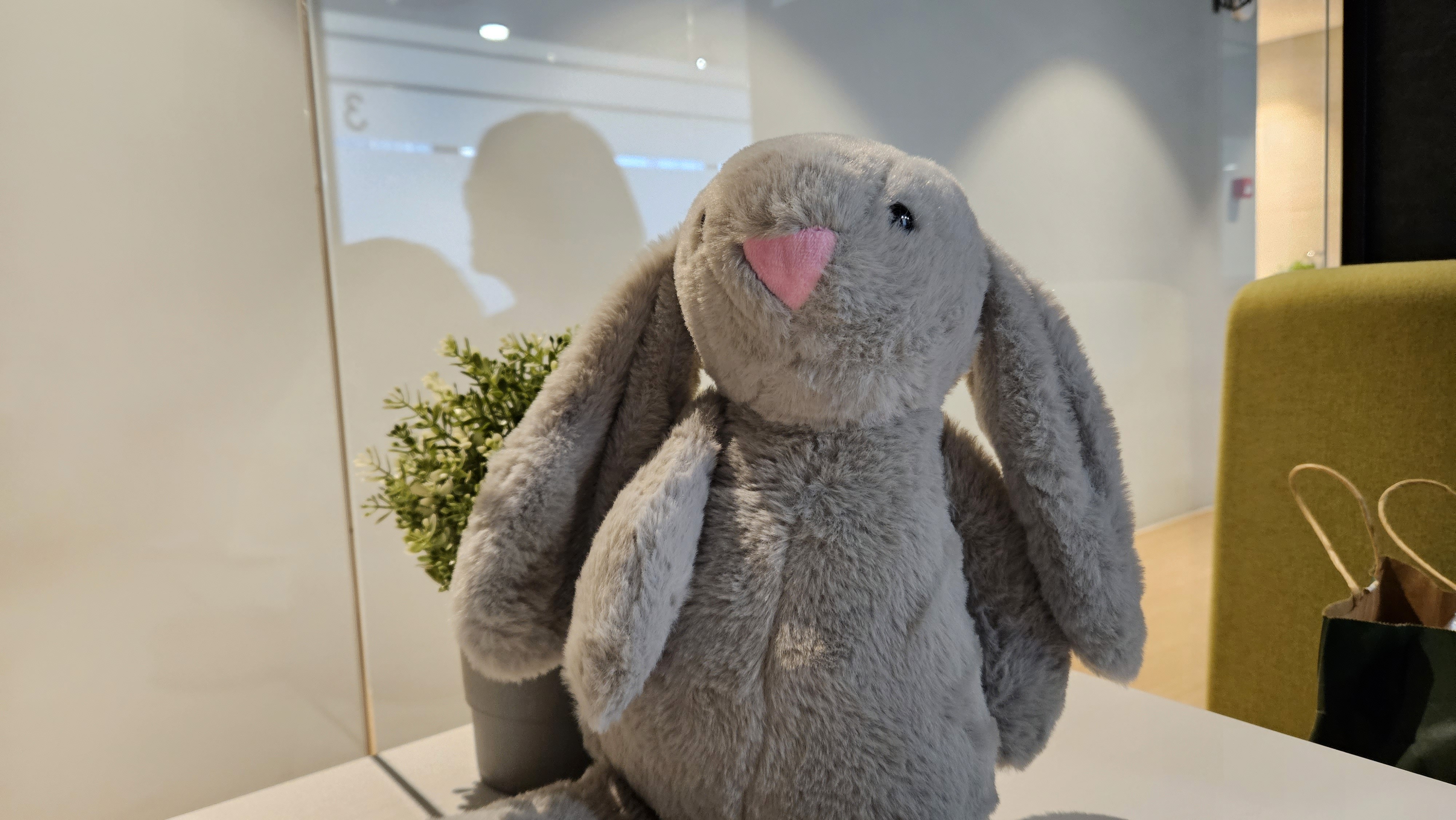
Photo by Gina
How do you say a word that feels bigger than your entire life?
I didn’t want to tell anyone about my diagnosis. It all started with a lump under my arm, something I thought was minor. When it was removed and sent for a biopsy, I tried not to think too much about it. A few weeks later, I sat in the doctor’s office, hoping—praying—for good news. My heart was pounding, my hands were shaking, and I kept telling myself it would be okay, but it wasn’t.
My doctor looked at me, took my hands in hers, and said, “I’m so sorry. It’s lymphoma. Stage 2.” The words hit me like a wave I couldn’t catch. She explained I would need to be referred to the National Cancer Centre Singapore, and soon after I was transferred to NUH Cancer Centre.
I was frozen. My mind screamed in disbelief. I kept hoping I was dreaming, that I would wake up and none of this would be real. But every pang in my chest, every ache in my body, reminded me that it wasn’t a nightmare I could wake from. It was real. In a moment, my world changed forever. And because I already live with Complex PTSD, Mixed Anxiety-Depressive Disorder (MADD), and Psychogenic Nonepileptic Seizures (PNES), the shock did not land gently. My nervous system does not know how to receive danger calmly. It goes straight to alarm, and I felt this immediately — hypervigilance, racing thoughts, and the sense that I was no longer safe in my own body.
I was afraid of the cancer, but I was also afraid of myself. A cancer diagnosis, when you already live with trauma, feels like being asked to take on something new while still carrying all the old burdens. Would the nightmares return? Would hospital corridors trigger flashbacks? Would the stress cause my PNES episodes to flare again? Or would the depression that once nearly consumed me come back stronger?
Cancer is a big and scary word. It sits in your throat like something sharp. It echoes in hospital corridors, and it changes the way people look at you. When I first heard it, I felt as if the universe hated me and everything I had already survived was not enough. The storms in my life seemed to have grown into a hurricane. Because of this, I carried the word quietly at first. I didn’t want it to become part of my story, but there was one person I knew I had to tell.
She has been my counsellor since 2021. She has seen the broken pieces of me, the anger, the trauma, and the nights I didn’t want to live. This was not news she would ever expect from me, and I didn’t even know how to form the words to tell her. I remember staring at my phone, revising what I would say in my head. There was no gentle way to tell her, “I have Stage 2 Hodgkin’s lymphoma.”
Yet when I finally told her, the silence that followed wasn’t cold. It was a heavy silence, and then she cried alongside me. What I didn’t understand then was that she wasn’t just sharing my grief. She was also quietly helping me see my own resilience. Every time I said, “I can’t do this,” she didn’t argue. She didn’t rescue. She asked questions that brought me back to something steadier:
You are here.
You are thinking this through.
You are still choosing.
I thought strength meant not breaking, but she showed me that strength can look like breaking at first and yet in fact be resilience. My strength came from sitting in chemo while afraid, and from admitting I was angry. I found more strength in continuing therapy when depression pressed heavy on my chest, and in allowing myself to say, “This is unfair,” without shame.
I had survived trauma before. I had learned grounding skills. I had endured PNES episodes and fought for stability. The diagnosis threatened to unravel all of this, and some days it did. And yet I did not disappear. Cancer did not erase the woman who had already rebuilt herself once. If anything, it revealed more of her. Stage 2 Hodgkin’s lymphoma meant chemotherapy. Four cycles, I was told. I tried to be brave. But chemotherapy isn’t just a regular IV drip. It stings and burns, leaving your body aching in ways you didn’t know were possible. It drains you both physically and mentally.
I was already fighting other illnesses. There were days I didn’t want to continue, when I thought, “Haven’t I done enough? Haven’t I survived enough?”
Then, just when I was mentally prepared to finish four cycles, the doctor added a fifth, and a stem cell transplant.
I remember looking at my counsellor during our next session, telling her that I didn’t want chemo, and asking her to decide for me, to tell me which path would hurt less. Instead of choosing for me, she helped me find my own strength. She reminded me again that fear does not mean weakness. That not wanting chemo did not mean I was ungrateful for treatment. She sat with my anger, bargaining and exhaustion, helping me see my strengths.
I had thought I needed someone to decide for me, someone who was stronger than I was. She reflected back a different truth at me, one I initially had difficulty believing: that I was already surviving. I wasn’t yet surviving with grace, or without fear. My strength was not loud, and on the surface, it didn’t look like optimism. Yet it was based on honesty. I could allow myself to say, “I don’t want this,” instead of pretending I was brave, and I showed up for chemotherapy even while terrified. I continued therapy even when depression whispered that nothing mattered. Instead of isolating myself, I asked for help, and I stayed even when every part of me wanted to run.
Slowly, I realised that I’d survived trauma, learned grounding techniques, fought CPTSD flare-ups and kept going through PNES episodes through the resilience that cancer was showing me again.
My counsellor didn’t give me strength, but instead acted as a mirror to me. In that mirror, I began to see that fear and courage could coexist. Exhaustion, I learned, does not cancel out resilience; continuing, even if broken, is still continuing. My strength came not from a lack of fear, but from my choice to live.
My counsellor encouraged me through every cycle, checking in with me after infusions. She helped me untangle the hopeless thoughts that chemotherapy magnified. When I felt as if my body was betraying me, she reminded me that my body was also fighting for me.
I have finished all four cycles now. I have one more to go, and then the stem cell transplant. I never imagined I would be battling cancer at 22. I turn 23 in June 2026, and instead of thinking about birthdays or milestones, I am thinking about blood counts and hospital rooms.
But I am not alone. I am so grateful to have my counsellor beside me in this chapter of my life. I’m also grateful to the people who hold my hands, send messages, pray for me, or sit with me in silence. Cancer is a long, painful, and mentally draining battle that cannot simply be treated with a pill.
To those struggling with cancer, I’d say this: I feel you, your pain, your cries and your anger. I see these things in my own mirror too. We are not facing an easy fight. But I’ve learned that even when the word feels too big, and the universe unfair, having someone stand beside you can make the unbearable slightly more bearable.
Sometimes, that is enough to keep going.
Gina is a 22-year-old youth advocate who is currently pursuing early childhood education. She loves working with children and believes that everyone’s mental health starts from a young age. By sharing her story, she hopes to inspire others on their mental health journeys. Gina has also created a free resource directory to help young children (7-12) & youths (13-25) easily access mental health support, which can be found here: (https://linktr.ee/ginaaax.hb). She also really likes bubble tea and baking.
Read more of our Tapestry Stories here
Photo by Gina


hello@thetapestryproject.sg
The Foundry, 11 Prinsep Link, Singapore 187949
hello@thetapestryproject.sg
The Foundry, 11 Prinsep Link, Singapore 187949
hello@thetapestryproject.sg
The Foundry, 11 Prinsep Link, Singapore 187949
hello@thetapestryproject.sg
The Foundry, 11 Prinsep Link, Singapore 187949