By Youth
By Youth
Finally Heard — My Mental Health and PNES Journey
Finally Heard — My Mental Health and PNES Journey
Gina recounts how symptoms of pain and seizures went undiagnosed, and she felt unheard by medical professionals until she was finally diagnosed as having Psychogenic Non-Epileptic Seizures. She shares her story to spread awareness so that others do not have to suffer in silence.
Gina recounts how symptoms of pain and seizures went undiagnosed, and she felt unheard by medical professionals until she was finally diagnosed as having Psychogenic Non-Epileptic Seizures. She shares her story to spread awareness so that others do not have to suffer in silence.
Gina
Gina
by Gina //
“You’re fine.”
“Your scans are clear.”
“It’s probably just in your head.”
These are the phrases that I’ve heard echoed in hospital rooms, whispered by doctors with kind smiles and tired eyes. I’ve heard them more times than I can count. Each time, they cut a little deeper.
For years, I’ve struggled with my mental health, living with complex PTSD, ADHD, and trauma from my childhood. But nothing prepared me for what happened when my psychological pain began showing up physically.
In 2023, I began experiencing intense chest pains — the kind that make you feel like something is seriously wrong. It felt as if someone were sitting on my chest, a deep, heavy tightness I’d never felt before. I went to the hospital three times in one week. Each time, they ran their routine checks — ECG, blood work, X-rays. Each time, the results were clean. “There’s nothing wrong,” they said. And each time, they sent me home with different types of painkillers — mild, moderate, or extreme — as if the pain could just be silenced by a dosage of medication.
But the silence never lasted. The pain would return, sharper and more frustrating, and I stopped seeking help. I felt as if I wasn’t being believed.
Once my records showed a psychiatric history, it felt as if medical professionals had already made up their minds about me. I wasn’t seen as someone in pain, but was viewed as a mental health patient seeking meds.
So I started managing the chest pain myself. Not because I wanted to, but because no one else would.
In 2025, though, everything changed.
After taking a gap year, I decided to return to school because I wanted a fresh start. It felt strange going back after a year away, and I was quite nervous at first, especially since I was making a career switch from hospitality to early childhood education. My classmates were from all different age groups, which made the experience both interesting and a little intimidating. But just as I began getting back into a routine, my body betrayed me in a way I never expected.
It began with a faint. I’ve had vasovagal syncope before, and I knew what that felt like. But this time, it was different. I was in a session with my psychologist when I first suddenly lost consciousness. I was told later that my body went completely stiff. I shook violently. My eyes rolled back. It wasn’t just one episode either. Over the next few days, I had more seizures, which were unpredictable and terrifying.
One day, after an online class, I started feeling dizzy. And then came a cluster of relentless seizures. My psychologist and her colleague were with me, trying to help. But after a certain point, they decided to call for an ambulance. I didn’t want to go. “They won’t find anything,” I said. “They never do.” But this time, the people around told me, “No negotiations.” And they were right.
That ambulance took me to Woodlands Health, a hospital I had never been to before, and which I didn’t even know existed. But as soon as I arrived, something felt different. The staff didn’t dismiss me. They listened. They checked my vitals, ran tests, monitored my heart. Above all, and they believed me when I told them, “Something’s wrong.”
At 3am, they admitted me. For the first time, someone took my symptoms seriously, and I felt that I could finally breathe.
The next morning, during ward rounds, I met the doctor assigned to me. I told her everything, including my fear that all of my symptoms would once again be blamed on my mental health. I didn’t want to waste their time or resources. However, she gently reassured me: “Even if it is psychological, it’s real. And we’ll find a way to treat it. You don’t have to prove your pain.” Her kindness floored me. She even spoke to me at eye level, something no doctor had ever done before.
Despite this, the seizures kept coming. I lost the ability to walk or even stand. I missed school. Missed therapy. I felt as if I was disappearing. I was spiraling into a deep, painful place. My mind was filling with darkness. I felt broken, hopeless. I started thinking about ending it all. One night, I even tried — using whatever extra medication I had in my bag.
But it didn’t work. And that attempt brought in a hospital psychologist who talked to me, and grounded me. Still, I missed my regular therapist. Nothing felt the same. I kept wondering: Why me? Why do I have to suffer so much? I’m only in my 20s. I should be enjoying my life, not losing it to a body and mind that won’t cooperate.
Eventually, after weeks of tests and communication between Woodlands Health and my IMH psychiatrist, the doctors gave me a name for what I was going through: PNES — Psychogenic Non-Epileptic Seizures.
PNES is a form of Functional Neurological Disorder (FND), caused by trauma, and triggered by stress. The seizures are not epileptic ones, but are still very real. Effectively, my brain was short-circuiting under the weight of past and present trauma, and my body was paying the price.
I wasn’t surprised by the diagnosis, and in fact I had suspected it for some time. I was surprised, however, by how seriously the doctors took my diagnosis. “Yes, it’s psychological,” they said. “But seizures are still seizures. They matter. You matter.”
I spent nearly a month in the hospital, where I went through physiotherapy, which felt like a chore. It reminded me of a baby learning to walk, and that’s exactly how I felt, having to relearn every small movement. I did my physiotherapy at Woodlands Health while I was still an inpatient. My experience there was unlike any other hospital stay; the staff at Woodlands Health took the time and had the patience to truly investigate my seizures. You could really feel the care, love, and understanding from the doctors — it made all the difference.
At first, I was in a wheelchair. Slowly, with support, I began walking again. It’s still an ongoing journey. I’m still dealing with flare-ups, still facing bad mental health days, still undergoing treatment. But I’m alive. And I’m trying.
Living with PNES is not easy. It’s hard enough dealing with seizures, but when people think you’re faking it — when your illness is invisible on a scan — the emotional weight becomes unbearable. Especially when it’s paired with mental illness.
But I’m not sharing my story for sympathy, nor for attention. I’m sharing this to spread awareness.
Because there are people out there like me: young, struggling, and yet constantly dismissed.
People who are suffering in silence, doubting their own reality because the world tells them it’s “all in their head.”
To those people: You are not alone. Your pain is real. You are valid. And you deserve to be believed.
And to the healthcare workers who do listen — thank you. You might not realize it, but your compassion can save a life. It saved mine.
Gina is a 22-year-old youth advocate who is currently pursuing early childhood education. She loves working with children and believes that everyone’s mental health starts from a young age. By sharing her story, she hopes to inspire others on their mental health journeys. Gina has also created a free resource directory to help young children (7-12) & youths (13-25) easily access mental health support, which can be found here: (https://linktr.ee/ginaaax.hb). She also really likes bubble tea and baking.
Read more of our Tapestry Stories here.
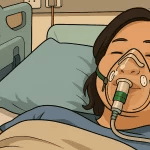
Illustration by Gina with ChatGPT
by Gina //
“You’re fine.”
“Your scans are clear.”
“It’s probably just in your head.”
These are the phrases that I’ve heard echoed in hospital rooms, whispered by doctors with kind smiles and tired eyes. I’ve heard them more times than I can count. Each time, they cut a little deeper.
For years, I’ve struggled with my mental health, living with complex PTSD, ADHD, and trauma from my childhood. But nothing prepared me for what happened when my psychological pain began showing up physically.
In 2023, I began experiencing intense chest pains — the kind that make you feel like something is seriously wrong. It felt as if someone were sitting on my chest, a deep, heavy tightness I’d never felt before. I went to the hospital three times in one week. Each time, they ran their routine checks — ECG, blood work, X-rays. Each time, the results were clean. “There’s nothing wrong,” they said. And each time, they sent me home with different types of painkillers — mild, moderate, or extreme — as if the pain could just be silenced by a dosage of medication.
But the silence never lasted. The pain would return, sharper and more frustrating, and I stopped seeking help. I felt as if I wasn’t being believed.
Once my records showed a psychiatric history, it felt as if medical professionals had already made up their minds about me. I wasn’t seen as someone in pain, but was viewed as a mental health patient seeking meds.
So I started managing the chest pain myself. Not because I wanted to, but because no one else would.
In 2025, though, everything changed.
After taking a gap year, I decided to return to school because I wanted a fresh start. It felt strange going back after a year away, and I was quite nervous at first, especially since I was making a career switch from hospitality to early childhood education. My classmates were from all different age groups, which made the experience both interesting and a little intimidating. But just as I began getting back into a routine, my body betrayed me in a way I never expected.
It began with a faint. I’ve had vasovagal syncope before, and I knew what that felt like. But this time, it was different. I was in a session with my psychologist when I first suddenly lost consciousness. I was told later that my body went completely stiff. I shook violently. My eyes rolled back. It wasn’t just one episode either. Over the next few days, I had more seizures, which were unpredictable and terrifying.
One day, after an online class, I started feeling dizzy. And then came a cluster of relentless seizures. My psychologist and her colleague were with me, trying to help. But after a certain point, they decided to call for an ambulance. I didn’t want to go. “They won’t find anything,” I said. “They never do.” But this time, the people around told me, “No negotiations.” And they were right.
That ambulance took me to Woodlands Health, a hospital I had never been to before, and which I didn’t even know existed. But as soon as I arrived, something felt different. The staff didn’t dismiss me. They listened. They checked my vitals, ran tests, monitored my heart. Above all, and they believed me when I told them, “Something’s wrong.”
At 3am, they admitted me. For the first time, someone took my symptoms seriously, and I felt that I could finally breathe.
The next morning, during ward rounds, I met the doctor assigned to me. I told her everything, including my fear that all of my symptoms would once again be blamed on my mental health. I didn’t want to waste their time or resources. However, she gently reassured me: “Even if it is psychological, it’s real. And we’ll find a way to treat it. You don’t have to prove your pain.” Her kindness floored me. She even spoke to me at eye level, something no doctor had ever done before.
Despite this, the seizures kept coming. I lost the ability to walk or even stand. I missed school. Missed therapy. I felt as if I was disappearing. I was spiraling into a deep, painful place. My mind was filling with darkness. I felt broken, hopeless. I started thinking about ending it all. One night, I even tried — using whatever extra medication I had in my bag.
But it didn’t work. And that attempt brought in a hospital psychologist who talked to me, and grounded me. Still, I missed my regular therapist. Nothing felt the same. I kept wondering: Why me? Why do I have to suffer so much? I’m only in my 20s. I should be enjoying my life, not losing it to a body and mind that won’t cooperate.
Eventually, after weeks of tests and communication between Woodlands Health and my IMH psychiatrist, the doctors gave me a name for what I was going through: PNES — Psychogenic Non-Epileptic Seizures.
PNES is a form of Functional Neurological Disorder (FND), caused by trauma, and triggered by stress. The seizures are not epileptic ones, but are still very real. Effectively, my brain was short-circuiting under the weight of past and present trauma, and my body was paying the price.
I wasn’t surprised by the diagnosis, and in fact I had suspected it for some time. I was surprised, however, by how seriously the doctors took my diagnosis. “Yes, it’s psychological,” they said. “But seizures are still seizures. They matter. You matter.”
I spent nearly a month in the hospital, where I went through physiotherapy, which felt like a chore. It reminded me of a baby learning to walk, and that’s exactly how I felt, having to relearn every small movement. I did my physiotherapy at Woodlands Health while I was still an inpatient. My experience there was unlike any other hospital stay; the staff at Woodlands Health took the time and had the patience to truly investigate my seizures. You could really feel the care, love, and understanding from the doctors — it made all the difference.
At first, I was in a wheelchair. Slowly, with support, I began walking again. It’s still an ongoing journey. I’m still dealing with flare-ups, still facing bad mental health days, still undergoing treatment. But I’m alive. And I’m trying.
Living with PNES is not easy. It’s hard enough dealing with seizures, but when people think you’re faking it — when your illness is invisible on a scan — the emotional weight becomes unbearable. Especially when it’s paired with mental illness.
But I’m not sharing my story for sympathy, nor for attention. I’m sharing this to spread awareness.
Because there are people out there like me: young, struggling, and yet constantly dismissed.
People who are suffering in silence, doubting their own reality because the world tells them it’s “all in their head.”
To those people: You are not alone. Your pain is real. You are valid. And you deserve to be believed.
And to the healthcare workers who do listen — thank you. You might not realize it, but your compassion can save a life. It saved mine.
Gina is a 22-year-old youth advocate who is currently pursuing early childhood education. She loves working with children and believes that everyone’s mental health starts from a young age. By sharing her story, she hopes to inspire others on their mental health journeys. Gina has also created a free resource directory to help young children (7-12) & youths (13-25) easily access mental health support, which can be found here: (https://linktr.ee/ginaaax.hb). She also really likes bubble tea and baking.
Read more of our Tapestry Stories here.
Illustration by Gina with ChatGPT


hello@thetapestryproject.sg
The Foundry, 11 Prinsep Link, Singapore 187949
hello@thetapestryproject.sg
The Foundry, 11 Prinsep Link, Singapore 187949
hello@thetapestryproject.sg
The Foundry, 11 Prinsep Link, Singapore 187949
hello@thetapestryproject.sg
The Foundry, 11 Prinsep Link, Singapore 187949