By Working Professionals
By Working Professionals
Confronting Stigma at the Workplace: Rongxiang’s Story
Confronting Stigma at the Workplace: Rongxiang’s Story
Rongxiang recounts his encounters with workplace mental heath stigmatisation, as well as remembering the kindness of those who helped him in his journey
Rongxiang recounts his encounters with workplace mental heath stigmatisation, as well as remembering the kindness of those who helped him in his journey
Rongxiang
Rongxiang
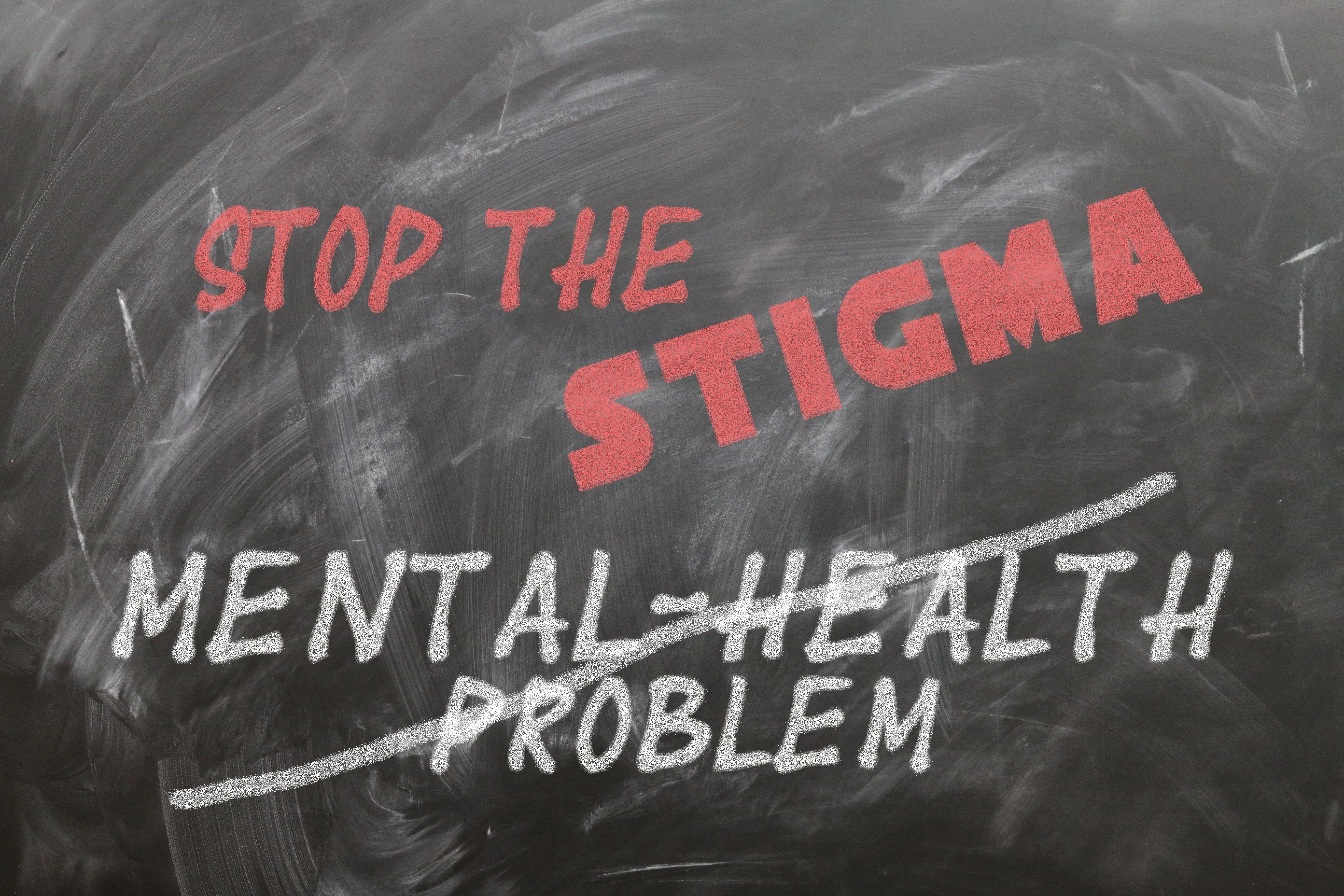
Mental illness is not a terminal disease. It may seem invisible, like a form of cancer, but like all cancers it can be treated. Hence I’ve found it important for us to work closely with our medical team, caregivers, friends and family to overcome each obstacle one by one.
In 2001, I was 19 years old and serving my National Service. I was posted to Gombak Base HQ Mindef, and after passing several background checks by Military Security Department, I was given a clearance of Top Secret, and designated to report directly to the Chief of Army.
2001 was also the year when the 9/11 terrorist attacks took place in the U.S., and security became extremely tight at Mindef. I felt suffocated, developed stomach tics, and was diagnosed by the army psychiatrist as suffering from generalised anxiety disorder and prescribed Valium. This was the first time in my life where questions of mental health arose for me at my workplace.
I informed my Chief Clerk then about my diagnosis, and she wasn’t judgemental about me, but instead told me to stay resilient and rallied my teammates to support me and one another.
This was the first time I saw how good leadership can make a positive difference to people living with mental health challenges.
I was comforted by her support, and I pushed through and completed the rest of my conscription liabilities and ORDed with an outstanding Certificate of Service.
A few years later, in 2005, I was applied for the National Infocomm Scholarship with the then Infocomm Development Authority. To my surprise, I was chosen for the scholarship by the partner company Fujitsu Asia Pte Ltd out of around ten shortlisted applicants. I felt undeserving of the award, and I told the NIS Secretariat that I had a history of mental health struggles. I still remember the officer telling me that in the United States there were lots of professionals who also suffer from mental illnesses, and that the organisation supported me. She encouraged me to accept the scholarship offer, which I did. I really appreciated the liberal and open attitude of our civil service officers towards mental illness, because I was already feeling very demoralised by my health record, and the last thing I needed was someone to put me down. I am grateful to the officer and IDA for giving me the chance to prove that I could succeed.
From 2008-09 the recession forced Fujitsu to undergo a major restructuring exercise and cut headcounts. Each month we said goodbye to some teammates, and there was plenty of anxiety in the office. I had completed my scholarship bond and I felt that I could not bear to see such suffering. After 80% of my team had been retrenched, I tendered my resignation.
In the next ten years, however, I felt like a sheep that has gone astray. I kept wondering whether I’d made a wrong decision to quit my job at Fujitsu, especially because after my departure I found a lot of obstacles in trying to find a new job. My mental health struggles returned. Even though I was able to apply for new job openings, each time I was granted an interview, I would experience a fear and nervousness in the interviewing process. I still recall confiding in my former Fujitsu mentor about my predicament, and she told me encouragingly that, “Even if you cannot snag the job, you can always become an interview expert.”
Hearing her advice gave me courage to confront my inner discomfort. I probably applied for around 1000 job openings between the years 2009-2019, and throughout these years I attended around 50 interviews. Initially I was still able to convince the interviewers that I was a good candidate, because I came from a strong academic and career background, so major companies and statutory boards, the Ministry of Education and several local startups hired me as a full-time staff.
However, I wasn’t able to stay with each employer for long. I found a job as an English and Mathematics teacher at a neighbourhood school. Before I started work I was already jittery, because even though I had been a good student, I didn’t have much classroom teaching experience. When I started work, the students gave me a tough time because I wasn’t able to control them. Other teachers found me a decent colleague, but the principal took a dislike to me. She called me to her office one day, criticised my meekness, and then eventually asked me to leave that very same day. I was both angry and disappointed, because I felt I was already doing my best, but for her my best wasn’t good enough.
Another job I found was with a statutory board as a call centre operator. I attended their training for a week, and they found out I was living with mental health challenges. After the first round of training they hauled me up to the manager’s office and asked if I was suffering from a mental illness.
I was honest with them, but the manager told me that the call centre was too hectic for me and asked me to quit because I wouldn’t be able to cope, without making any offer of accommodation. I almost broke down.
I kept trying, and I eventually found another call centre job with a private company who did outsourcing work for the Heath Promotion Board. I started work happily because their human resource department asked me few questions, and so I didn’t have to lie about my mental health condition. However, after I started work I was placed under the supervision of a senior officer who was abusive. She kept on shouting that she wanted to murder people because things weren’t going her way. I felt shocked, but I didn’t want to confront her. However, I told the team that I was previously diagnosed with depression over lunch. When the information reached my supervisor’s ears, she called me into the meeting room and told me that since the HPB was our primary customer, we needed “healthy” staff for the team. She made me quit even though it was against my wishes.
In the year 2018, after several years of failed attempts to stay in a fixed job for more than three months, I was hospitalised and diagnosed with bipolar. This was when I decided that enough was enough. I was placed under Institute of Mental Health’s Psychosis Intervention Programme (EPIP) and I also signed up for IMH’s OcTAVE occupational therapy service. I was basically restarting from scratch. IMH OcTAVE tried to matchmake me to call centre jobs such as KFC, but I didn’t pass their entrance tests. So they tried further, by placing me in their in-house clerical training. I passed that entrance test, and I worked with them for several weeks.
IMH also worked with me to try and find employment that was more suitable for my education background. I was trained to be an engineer, so after several rounds of consultation with occupational therapists, we agreed that it would be a good idea for me to join my maternal aunt’s structural engineering business.
I found peace and solidarity since then, and have been working for my aunt for the past seven years since 2019. The pay may not be a lot in a family business, but at least I am still working in an engineering-related field which I was trained for. I am also grateful to all those who have guided me along the way when I was down and out.
I have survived the darkest moments of my life since I was diagnosed with mental illnesses, and I am truly appreciative of all the help that has been rendered to me in keeping me afloat. If I had time, I would go into the details of how each and every person helped me and express my sincere thanks, but what gives me more meaning instead is a verse from the Bible: “I have gone astray like a lost sheep; seek your servant, for I do not forget your commandments.” – Psalm 119:176
I have been lost in transition before, but throughout the years of seeking I have kept faith and did my best not to transgress the law. Hence, even though I do not identify myself as a Christian, God has never given up on me and I have been assisted plentifully in many ways. Mental illness can be treated, and if we are unwell, we should seek treatment and get professional help right away. Working with our team of experts as well as cherishing our family and friends, we can embark on the journey to recovery.
Rongxiang is a former National Infocomm Scholar and ex-IT professional who transitioned away from corporate world after being diagnosed with mental illnesses. He now focuses on recovery, caregiving, spiritual growth and living simply. No longer chasing the conventional idea of success, these days he walks a path of reflection, minimalism and service to those close to him.
Under the Singapore Statutes Online, the government passed the Criminal Law Reform Bill in 2019, officially repealing Section 309 of the Penal Code which previously criminalised attempted suicide.
Read more of our Tapestry Stories here
Image by Gerd Altmann from Pixabay
Mental illness is not a terminal disease. It may seem invisible, like a form of cancer, but like all cancers it can be treated. Hence I’ve found it important for us to work closely with our medical team, caregivers, friends and family to overcome each obstacle one by one.
In 2001, I was 19 years old and serving my National Service. I was posted to Gombak Base HQ Mindef, and after passing several background checks by Military Security Department, I was given a clearance of Top Secret, and designated to report directly to the Chief of Army.
2001 was also the year when the 9/11 terrorist attacks took place in the U.S., and security became extremely tight at Mindef. I felt suffocated, developed stomach tics, and was diagnosed by the army psychiatrist as suffering from generalised anxiety disorder and prescribed Valium. This was the first time in my life where questions of mental health arose for me at my workplace.
I informed my Chief Clerk then about my diagnosis, and she wasn’t judgemental about me, but instead told me to stay resilient and rallied my teammates to support me and one another.
This was the first time I saw how good leadership can make a positive difference to people living with mental health challenges.
I was comforted by her support, and I pushed through and completed the rest of my conscription liabilities and ORDed with an outstanding Certificate of Service.
A few years later, in 2005, I was applied for the National Infocomm Scholarship with the then Infocomm Development Authority. To my surprise, I was chosen for the scholarship by the partner company Fujitsu Asia Pte Ltd out of around ten shortlisted applicants. I felt undeserving of the award, and I told the NIS Secretariat that I had a history of mental health struggles. I still remember the officer telling me that in the United States there were lots of professionals who also suffer from mental illnesses, and that the organisation supported me. She encouraged me to accept the scholarship offer, which I did. I really appreciated the liberal and open attitude of our civil service officers towards mental illness, because I was already feeling very demoralised by my health record, and the last thing I needed was someone to put me down. I am grateful to the officer and IDA for giving me the chance to prove that I could succeed.
From 2008-09 the recession forced Fujitsu to undergo a major restructuring exercise and cut headcounts. Each month we said goodbye to some teammates, and there was plenty of anxiety in the office. I had completed my scholarship bond and I felt that I could not bear to see such suffering. After 80% of my team had been retrenched, I tendered my resignation.
In the next ten years, however, I felt like a sheep that has gone astray. I kept wondering whether I’d made a wrong decision to quit my job at Fujitsu, especially because after my departure I found a lot of obstacles in trying to find a new job. My mental health struggles returned. Even though I was able to apply for new job openings, each time I was granted an interview, I would experience a fear and nervousness in the interviewing process. I still recall confiding in my former Fujitsu mentor about my predicament, and she told me encouragingly that, “Even if you cannot snag the job, you can always become an interview expert.”
Hearing her advice gave me courage to confront my inner discomfort. I probably applied for around 1000 job openings between the years 2009-2019, and throughout these years I attended around 50 interviews. Initially I was still able to convince the interviewers that I was a good candidate, because I came from a strong academic and career background, so major companies and statutory boards, the Ministry of Education and several local startups hired me as a full-time staff.
However, I wasn’t able to stay with each employer for long. I found a job as an English and Mathematics teacher at a neighbourhood school. Before I started work I was already jittery, because even though I had been a good student, I didn’t have much classroom teaching experience. When I started work, the students gave me a tough time because I wasn’t able to control them. Other teachers found me a decent colleague, but the principal took a dislike to me. She called me to her office one day, criticised my meekness, and then eventually asked me to leave that very same day. I was both angry and disappointed, because I felt I was already doing my best, but for her my best wasn’t good enough.
Another job I found was with a statutory board as a call centre operator. I attended their training for a week, and they found out I was living with mental health challenges. After the first round of training they hauled me up to the manager’s office and asked if I was suffering from a mental illness.
I was honest with them, but the manager told me that the call centre was too hectic for me and asked me to quit because I wouldn’t be able to cope, without making any offer of accommodation. I almost broke down.
I kept trying, and I eventually found another call centre job with a private company who did outsourcing work for the Heath Promotion Board. I started work happily because their human resource department asked me few questions, and so I didn’t have to lie about my mental health condition. However, after I started work I was placed under the supervision of a senior officer who was abusive. She kept on shouting that she wanted to murder people because things weren’t going her way. I felt shocked, but I didn’t want to confront her. However, I told the team that I was previously diagnosed with depression over lunch. When the information reached my supervisor’s ears, she called me into the meeting room and told me that since the HPB was our primary customer, we needed “healthy” staff for the team. She made me quit even though it was against my wishes.
In the year 2018, after several years of failed attempts to stay in a fixed job for more than three months, I was hospitalised and diagnosed with bipolar. This was when I decided that enough was enough. I was placed under Institute of Mental Health’s Psychosis Intervention Programme (EPIP) and I also signed up for IMH’s OcTAVE occupational therapy service. I was basically restarting from scratch. IMH OcTAVE tried to matchmake me to call centre jobs such as KFC, but I didn’t pass their entrance tests. So they tried further, by placing me in their in-house clerical training. I passed that entrance test, and I worked with them for several weeks.
IMH also worked with me to try and find employment that was more suitable for my education background. I was trained to be an engineer, so after several rounds of consultation with occupational therapists, we agreed that it would be a good idea for me to join my maternal aunt’s structural engineering business.
I found peace and solidarity since then, and have been working for my aunt for the past seven years since 2019. The pay may not be a lot in a family business, but at least I am still working in an engineering-related field which I was trained for. I am also grateful to all those who have guided me along the way when I was down and out.
I have survived the darkest moments of my life since I was diagnosed with mental illnesses, and I am truly appreciative of all the help that has been rendered to me in keeping me afloat. If I had time, I would go into the details of how each and every person helped me and express my sincere thanks, but what gives me more meaning instead is a verse from the Bible: “I have gone astray like a lost sheep; seek your servant, for I do not forget your commandments.” – Psalm 119:176
I have been lost in transition before, but throughout the years of seeking I have kept faith and did my best not to transgress the law. Hence, even though I do not identify myself as a Christian, God has never given up on me and I have been assisted plentifully in many ways. Mental illness can be treated, and if we are unwell, we should seek treatment and get professional help right away. Working with our team of experts as well as cherishing our family and friends, we can embark on the journey to recovery.
Rongxiang is a former National Infocomm Scholar and ex-IT professional who transitioned away from corporate world after being diagnosed with mental illnesses. He now focuses on recovery, caregiving, spiritual growth and living simply. No longer chasing the conventional idea of success, these days he walks a path of reflection, minimalism and service to those close to him.
Under the Singapore Statutes Online, the government passed the Criminal Law Reform Bill in 2019, officially repealing Section 309 of the Penal Code which previously criminalised attempted suicide.
Read more of our Tapestry Stories here
Image by Gerd Altmann from Pixabay


hello@thetapestryproject.sg
The Foundry, 11 Prinsep Link, Singapore 187949
hello@thetapestryproject.sg
The Foundry, 11 Prinsep Link, Singapore 187949
hello@thetapestryproject.sg
The Foundry, 11 Prinsep Link, Singapore 187949
hello@thetapestryproject.sg
The Foundry, 11 Prinsep Link, Singapore 187949